Kitchen energy saving tips for a more efficient home
The kitchen is one of the most energy‑hungry rooms in the home. With a few simple changes to how you cook, store food and use appliances, you can cut energy use while still eating well and keeping food safe.
Smarter kettle and hob habits
Kettles and hobs are used every day, so small changes here can make a real difference to your energy use.
Only boil what you need
Always make sure the kettle element is covered, then only add as much water as you need for tea, coffee or cooking. Overfilling wastes both energy and time.
Boil in the kettle, cook on the hob
For pasta, rice or vegetables, boil the water in the kettle first and then pour it into the pot. In many homes, this is quicker and uses less energy than heating cold water on the hob.
Match the pot to the ring and use lids
Choose a hob ring that’s close in size to your pot or pan, so heat goes into the food rather than escaping around the sides. Keeping a lid on helps food cook faster and uses less energy.
Make pans do double duty
Use stackable steamers or cook more than one vegetable in the same pot so you can prepare several items at once on a single ring.
Let residual heat do the work
Once food is nearly cooked, you can often turn an electric ring, induction zone or gas flame down very low, or off completely, and let the remaining heat finish the job.
Cut food smaller and thaw in advance
Smaller pieces cook more quickly. Defrosting food in the fridge (where safe) before cooking also reduces how long you need the hob or oven on.
Choosing the most energy‑efficient way to cook
Different appliances suit different jobs. Choosing the right one for the meal you’re cooking can save both time and energy.
Oven: Best for big batches
A full‑size oven is most efficient when you’re cooking for several people or making multiple dishes. Try to fill at least a couple of shelves whenever you switch it on.
Air fryer: Ideal for small portions
For one or two portions, an air fryer usually heats up faster and uses less energy than a full‑size oven. It’s well suited to small trays of chips, vegetables or chicken pieces.
Microwave: Great for reheating
Microwaves are typically the most efficient choice for reheating leftovers and handling quick cooking tasks. Reheat batch‑cooked meals in the microwave instead of turning the oven back on.
Hob: Your everyday all rounder
The hob works efficiently when you use the right‑sized ring, keep lids on and simmer rather than boil hard. Induction hobs are especially efficient, but all types benefit from good pan‑to‑ring matching.
Slow cooker: Low energy for long cooks
Slow cookers use relatively low power over a long period. They can be an efficient way to cook stews, casseroles and soups, especially when they replace long oven cooking times.
Getting the most from your oven
Ovens use a lot of energy, so it’s worth getting the most value every time you use one.
Batch cook and use every shelf
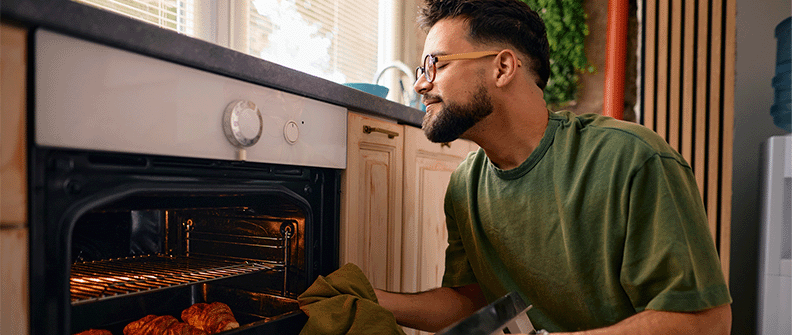
Cook several dishes at once. For example, today’s dinner and tomorrow’s lunch. Using multiple shelves spreads the energy cost across more meals.
Be sensible about pre‑heating
Some recipes, especially baking, do need a fully pre‑heated oven. Many everyday dishes don’t. Where temperature isn’t critical, shorten pre‑heating or put food in as the oven warms up.
Clear out stored trays and tins
Remove empty trays and tins stored in the oven. They absorb heat and slow cooking, meaning the oven needs to stay on for longer.
Use fan settings and suitable dishes
Fan settings spread heat more evenly, so you can often cook at slightly lower temperatures or for less time. Glass or ceramic dishes hold heat well and support efficient cooking.
Avoid opening the oven door too often
Every time you open the oven door, heat escapes and the oven has to work harder. Use the oven light and viewing window to check progress instead.
Keep door glass and seals clean
A clean door helps you see inside without opening it, while good seals keep heat in and reduce wasted energy.
Fridge and freezer energy efficiency
Fridges and freezers run all day, every day. Small changes here can save energy all year round.
Keep doors closed
Decide what you need before opening the door and close it promptly. Letting cold air escape makes the appliance work harder.
Use sensible temperature settings
As a general guide, keep fridges at around 2–3°C and freezers at around –15°C. This keeps food safe without over‑cooling.
Let food cool before storing
Allow hot food to cool first, within normal food‑safety limits, before placing it in the fridge or freezer.
Defrost ice build‑up
If you have a manual‑defrost freezer or ice box, defrost it once ice builds up to around 6mm. Thick ice increases energy use and reduces space.
Check door seals
Look for cracks or gaps. Moisture or ice around the door can indicate seals need cleaning or replacing.
Load appliances sensibly
Don’t overfill fridges and freezers so air can’t circulate, but don’t leave them nearly empty either. In half‑empty freezers, bottles of water can help stabilise temperatures.
Rethink that spare fridge or freezer
Older appliances in garages or sheds can use a lot of power. If you don’t need them, consider switching them off or replacing them with a more efficient model when possible.
Dishwashers and other kitchen appliances
Dishwashers and washing machines can be run more efficiently with a few simple habits.
Run full loads
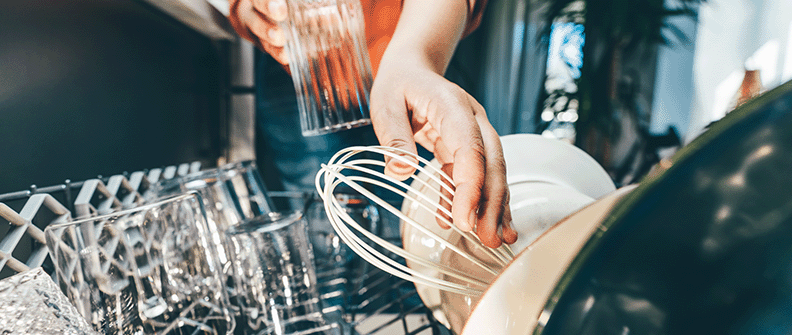
Wait until appliances are full before running them. Fewer, fuller loads usually use less energy and water.
Use eco or low‑temperature cycles
Eco and low‑temperature programmes heat water less and often use less electricity overall, even if they take a little longer.
Let dishes air‑dry
Use eco or air‑dry settings where available or open the door slightly at the end of the cycle to let steam escape naturally.
Scrape instead of rinsing
Scrape plates into the bin or compost rather than rinsing under hot running water. Dishwashers are designed to cope with normal food residue.
Switch off standby
Appliances can still use power when displays or lights stay on. Where safe and practical, turn them off at the socket.
Everyday kitchen energy saving habits
Small routines can make your kitchen more efficient without much effort.
Plan meals and batch cook
Planning ahead makes batch cooking easier, then you can reheat portions efficiently using the microwave or air fryer.
Simmer instead of boiling hard
Once food reaches the boil, turning the heat down to a gentle simmer usually cooks just as well while using less energy.
Choose good cookware
Flat‑bottomed pans work best on electric and induction hobs. Avoid warped pans that don’t sit flat, as they waste heat.
Keep appliances clean
Clean oven doors, hob surfaces and microwave interiors help prevent overcooking and unnecessary reheating.
Turn appliances off when you’re done
Get into the habit of switching off hobs, ovens and appliances as soon as you’ve finished cooking.
Extra resources
For more tips visit our energy saving tips page. For practical, up‑to‑date advice on saving energy across your home, you can visit these trusted public sources:
If you live in the Republic of Ireland
- Sustainable Energy Authority of Ireland (SEAI) for guidance, tools and grants to help you save energy at home.
- Home Energy Upgrade Advice Centre for a collection of guides, videos, FAQs and real-life upgrade stories.
If you live in Northern Ireland
- NI Direct for information on energy advice and grants in your area.
- NI Housing Executive for practical tips to help you save energy and money.
Consumer Council for Northern Ireland for independent advice on reducing energy use and costs.